History of the russell
Celebrating 100 Years of Detroit’s Industry, Arts, and Culture
1926 - 2026
the murray days ~ 1911 - 1955
The construction timeline of the 1600 Clay Street site is a fascinating story of rapid automotive expansion, corporate mergers, and Albert Kahn's architectural genius. The complex did not spring up all at once; rather, it grew into a massive 2.2-million-square-foot, seven-building campus through distinct phases over more than a decade.
Phase 1: Pre-Murray Roots (1911–1913)
Before the Murray Body Company completely took over the block, parts of the site were developed by other pioneering automotive suppliers.
The Pioneer Tenants: Between 1911 and 1913, early industrial structures were erected on the plot for the C.R. Wilson Body Company and the Anderson Electric Car Company (makers of the famous Detroit Electric automobiles).
Phase 2: The J.W. Murray Era Begins (1915–1916)
John William Murray and his son, John R. Murray, originally founded the J.W. Murray Manufacturing Company in 1913, producing stamped sheet metal parts like fenders and hoods for Ford and Hudson.
Breaking Ground: By 1915, their business had outgrown their initial space. They commissioned Albert Kahn to lay plans for a massive new complex bordering Clay, Morrow, and Marston streets.
First Major Kahn Buildings: In 1916, the first wave of large, reinforced-concrete Kahn structures opened on the site, instantly modernizing the neighborhood’s footprint.
Phase 3: The Great Merger & Kahn's Masterpiece (1923–1924)
The physical timeline reached its peak during a period of massive consolidation in Detroit's auto industry.
The 1924 Merger: J.W. Murray Mfg. Co. merged with its neighbors—including the C.R. Wilson Body Co., Towson Body Co., and J.C. Widman Co.—to officially form the corporate titan known as the Murray Body Corporation. This unified ownership of the entire 1600 Clay Street block.
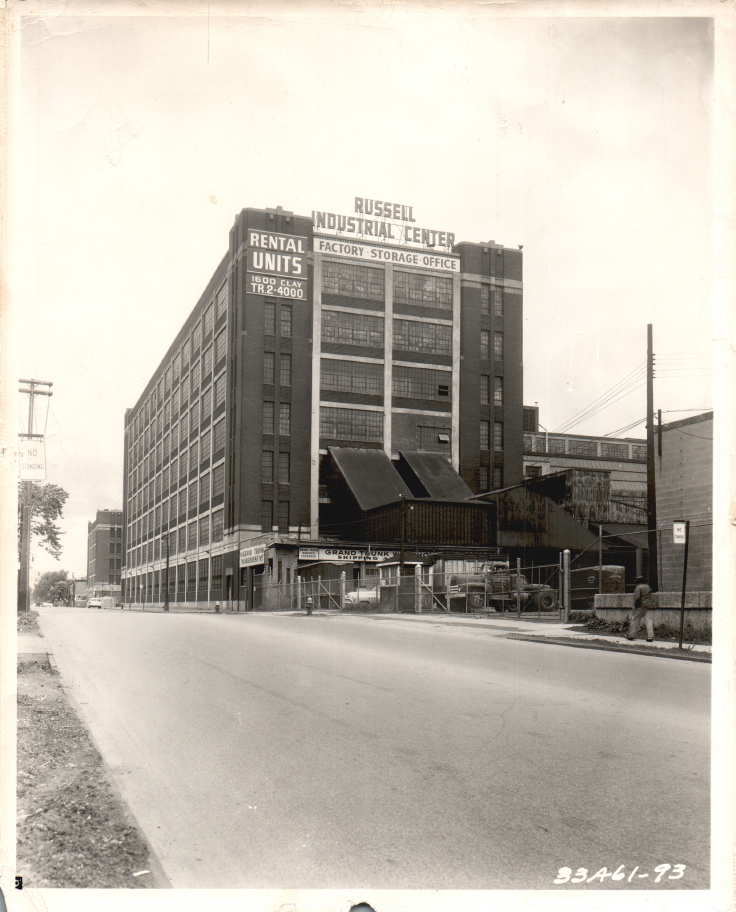
The Main Showpiece: Anticipating this massive scaling effort, Albert Kahn designed the long, handsome, multi-story industrial building facing Russell Avenue to the south. Constructed between 1923 and 1924, this building featured Kahn's signature steel-framed, floor-to-ceiling windows to flood the auto-body trim and paint shops with natural light.
Phase 4: Final Completion and Evolution (1925–1926)
The Finished Campus: By 1925–1926, the final structural links of the seven-building complex were completed. Ironically, just as the final bricks were laid, corporate mismanagement briefly pushed the company into receivership, forcing a reorganization into the Murray Corporation of America in 1927.
The End of Auto Production: Despite early financial hiccups, the completed complex pumped out millions of car bodies for the Ford Model A and De Luxe coupes until the mid-1950s, when automakers brought body manufacturing entirely in-house. Murray officially exited the automotive industry in 1955, locking the factory doors and setting the stage for its eventual 21st-century rebirth as the Russell Industrial Center.
after murray ~ 1960 - present
After the Murray Corporation of America officially sold its automotive body division in 1955, the massive facility embarked on a long, turbulent half-century journey. It shifted from corporate diversification and high-profile real estate flips to complete abandonment, before ultimately transforming into a vibrant creative hub.
The Corporate Hand-Off & The Helmsley Era (1960–1991)
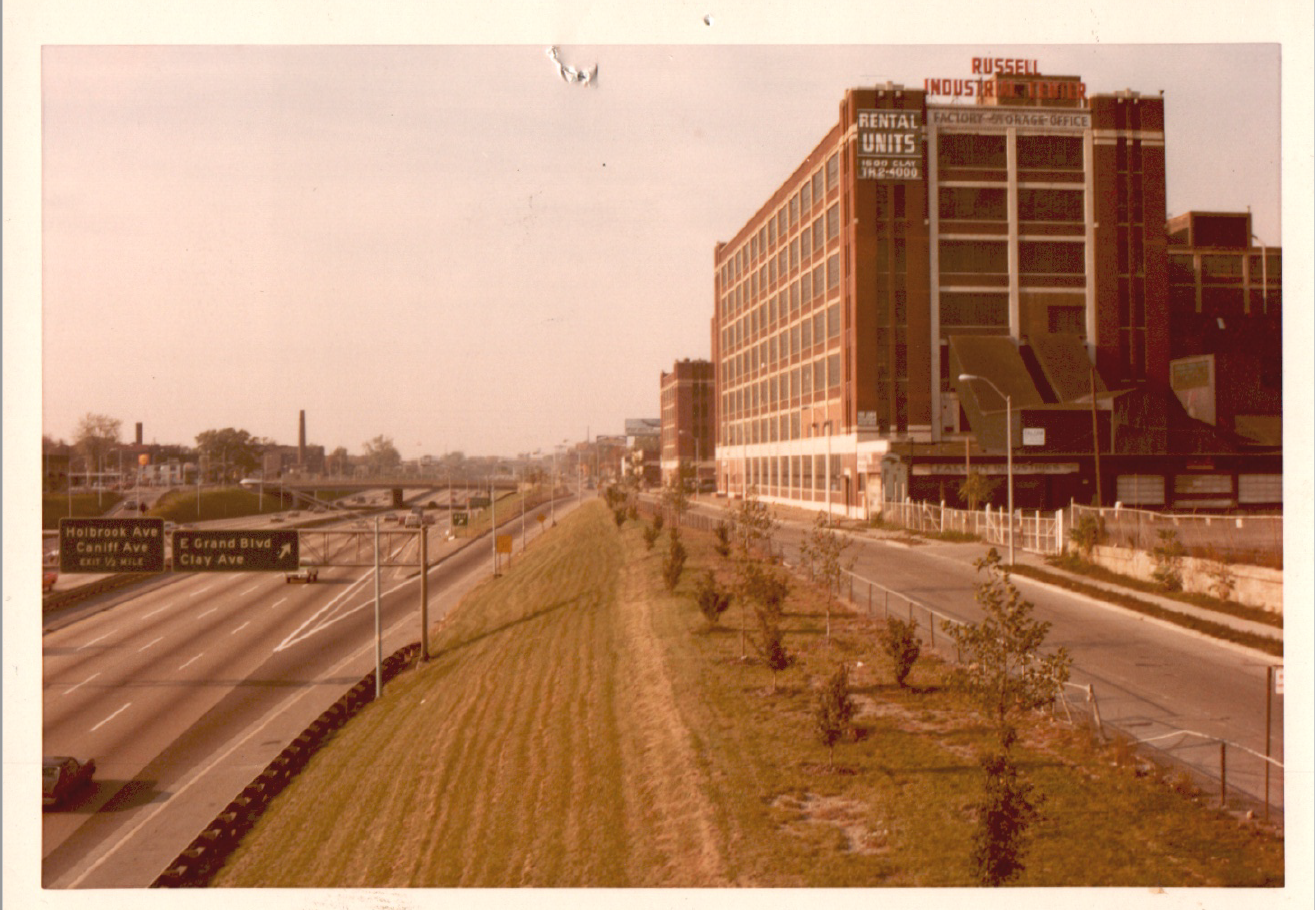
The Transition to "The Russell": In 1960, a real estate group called Packard Properties purchased the sprawling 1600 Clay Street complex. They officially re-christened the site as the Russell Industrial Center and subdivided the massive spaces to lease to roughly 60 different small light-industrial companies, suppliers, and commercial printers.
The Billionaire Landlord: In 1970, the property was purchased by the infamous New York billionaire real estate duo Harry and Leona Helmsley. The Helmsleys held onto the industrial site for two decades.
Tornado Damage: During the Helmsleys' ownership in the 1980s, a severe tornado ripped through Detroit and heavily damaged portions of the complex. The insurance payout funded significant structural restorations—including replacing rows of Albert Kahn’s iconic windows (though some original leaded-glass windows still survive on the property today).
Printing, Flooding, and Abandonment (1991–2002)
The Wintor-Swan Years: The Helmsleys sold the facility in 1991 to Wintor-Swan, a major commercial printing firm that occupied the campus for most of the 1990s.
The Final Shutdown: In 1998, a devastating combination of severe storms, localized flooding, and financial strain forced Wintor-Swan to halt operations. The 2.2-million-square-foot facility was completely locked up and left vacant. For the next five years, it sat in total disrepair, mirroring the fate of other nearby automotive relics like the Packard Plant.
The 21st-Century Creative Renaissance (2003–Present)
The $1 Million Gamble: In 2003, Detroit developer and entrepreneur Dennis Kefallinos bought the entire derelict seven-building complex for approximately $1 million.
An Artist’s Haven: Instead of flattening the complex, Kefallinos betting on the local arts scene. He slowly renovated the interiors, carving out over one million square feet of affordable, open-concept studio and loft spaces.
Modern Cult Classic: The modern Russell Industrial Center has evolved into one of the largest concentrations of working artists and creative professionals in the Midwest. It features graphic design offices, glassblowing studios, woodworkers, and clothing boutiques. It has also become a highly sought-after cultural venue, hosting major community events like the Michigan Glass Project, and large concerts and festivals, such as Tied Down Detroit, and Movement by Night.